What to Do When Your AI Campaign Fails
Send it to us.
We are turning campaigns around in a couple of days now, because AI campaigns fail for a handful of predictable reasons, and we are built to get the project out when they do.
Why they fail
The team does not like it. Somebody looks at the final set, and it is not what they pictured, even though every individual image was approved along the way.
Too much of it looks bad together. One AI image can be excellent. A whole library of them side by side goes wrong in a way no single image does. If one is good, more is not the same. It is often worse.
There is no emotion in it. The images are technically fine, and nothing happens when you look at them. That is the hardest thing to specify in a prompt and the first thing a customer notices.
The food does not look craveable. Making food look like something you want to eat is a chef's judgment about texture, temperature, gloss, and the exact moment a dish is at its best. It is not in the training data.
It made your product look different. The render smoothed your package, straightened your label, removed the glare, or added a new product in a lifestyle set that doesn’t look accurate, and now the campaign doesn't match what's on the shelf.
Why we can move fast
The studio is already ready. The prop room is stocked, the surfaces are on hand, the lifestyle sets are standing, and the food styling happens in-house rather than through a separate booking. There is no week of coordination between yes and camera.
We also cover the whole scope in one place: products on white, models, lifestyle, ecommerce-ready sets, stills, and motion. A failed campaign usually needs all of it rebuilt at once, and splitting that across separate bookings is where the time goes.
That is the whole answer to a two-day turnaround. Not heroics on the day. Preparation that already happened.
What we know to ask
How the package really looks, not how the render thinks it looks.
This is the question that saves a shoot. AI shows your product as it was designed: flat, smooth, evenly lit, crisp at the corners. The physical version arrives vacuum-sealed and wrinkled, or reflective, or distorted where the film clings to the contents.
Knowing that before the shot list is final is the difference between a day that works and a day that runs out. We prep the product to hold the look, and we rework the angles that only worked on the render.
Whether the ingredients are the right size.
AI has no idea how big a strawberry is next to a jar. It arranges by what looks balanced in a picture rather than what exists on a table, so packaging references routinely show fruit smaller than the product when reality is the opposite.
We resize and reposition the ingredients to get the same artistic feel with real ones. Trim them, move them back in frame, let perspective do the work. You get the composition you approved, built out of things that exist.
What we do with the impossible shots
Some references cannot be photographed at all. A dog pouring champagne. A pose where your arms would have to be as long as your legs. Steam off something cold.
The instinct is to explain why it cannot be done, which is usually a mistake. The person who asked is not confused about physics. They are describing a feeling and reaching for the nearest picture of it.
So we find what the image was for and shoot that instead. It almost always comes out better, because a subject doing something real is believable and a subject doing something impossible reads as strange even when the technique is perfect.
Since we are always building libraries for a variety of clients, we are experienced with all the props, creative ideas, and a can-do attitude!
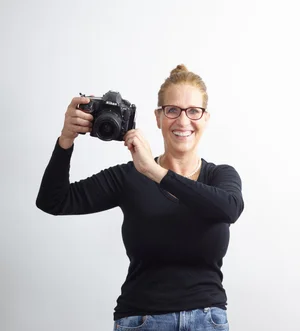
Judy Doherty Photography is a food, beverage, and CPG studio in Southern California. Judy Doherty, MPS, PCII, is a CIA-trained chef with over 20 years of professional culinary experience and more than a decade in commercial photography.